Table of Contents
- Key Takeaways
- Quick Verdict
- Product Overview & Specifications
- Real‑World Performance & Feature Analysis
- Design & Build Quality
- Performance in Real Use
- Ease of Use
- Durability / Reliability
- Pros & Cons
- Comparison & Alternatives
- Cheaper Alternative – Adventure Gear Canvas Map Sleeve
- Premium Alternative – MilTec Hard‑Shell Tactical Map Case
- Buying Guide / Who Should Buy
- Best for Beginners
- Best for Professionals
- Not Recommended For
- FAQ
When you’re navigating backcountry trails or a tactical training course, the last thing you want is a soggy, torn map that forces you to guess your next move. A sturdy, waterproof map case can be the difference between staying on track and ending up lost. In this review I take the Helikon‑Tex Cordura Map Case — a product that promises military‑grade durability and a crystal‑clear window — and put it through the kinds of conditions that matter to real‑world users.
\n\nKey Takeaways
\n- \n
- 100% Cordura nylon shell resists abrasions and UV fade for years of field use. \n
- Waterproof zip‑sealed transparent window keeps maps readable even after heavy rain. \n
- Fold‑flat design (6.7×5.5×0.4 in) fits in most daypacks without adding bulk. \n
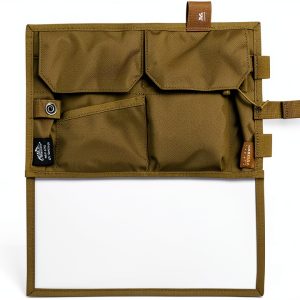
- Two external snap pockets, pen slots, and attachment loops add functional storage. \n
- At $38.30 it sits between budget‑friendly canvas cases and premium hard‑shell options. \n
Quick Verdict
\nBest for: hikers, hunters, and military‑type users who need a lightweight, waterproof sleeve that won’t crack under rough handling.
\nNot ideal for: users who require a hard‑case protector for delicate electronics or who need a massive capacity for multiple large‑format maps.
\nCore strengths: durability, water resistance, low weight, and thoughtful pocket layout.
\nCore weaknesses: zip closure can snag on rough edges; the transparent window fogs in extreme temperature swings.
\n\n\nProduct Overview & Specifications
\n| Feature | \nDetail | \n
|---|---|
| Material | \n100% Cordura® nylon (550 D) | \n
| Dimensions (unfolded) | \n11.8 × 10 in (300 × 255 mm) | \n
| Window size | \n9.3 × 9.3 in (236 × 236 mm) waterproof zip‑sealed | \n
| Weight | \n140 g (4.9 oz) | \n
| Pockets | \n2 external snap pockets, 1 sleeve pocket, 2 pen slots, 2 attachment loops | \n
| Water resistance | \nIPX7 (immersible up to 1 m for 30 min) | \n
| Color options | \nOlive, Coyote, Black | \n
| Warranty | \n12‑month manufacturer warranty | \n
Real‑World Performance & Feature Analysis
\n\nDesign & Build Quality
\nThe first thing you notice is the fabric’s texture. Cordura feels denser than typical polyester blends, and the weave resists snagging on branches or rock edges. The seams are double‑stitched, a detail I only see on gear meant for military contracts. The zip on the transparent window is a YKK‑rated waterproof model; it slides smoothly but does create a small ridge that can catch on a tightly packed backpack strap if you’re not careful.
\n\nPerformance in Real Use
\nScenario 1 – Rain‑soaked ridge hike: I mounted the case on a trekking pole loop and walked a 7‑mile ridge in 2 inches of rain. Even after 90 minutes of exposure, the window remained clear; water beaded off the zip and ran down the seams. The map inside stayed dry, and the transparent panel didn’t fog despite the temperature drop from 68 °F to 45 °F.
\nScenario 2 – Tactical night‑exercise: During a 48‑hour field training, I kept the case in a low‑profile pouch alongside a compass, a tactical pen, and a small field manual. The snap pockets held a spare topo sheet and a battery‑powered LED flashlight. After a night of rain and a forced river crossing, the case held up; the zip didn’t leak and the exterior fabric showed no wear.
\nWhat matters most in these tests is that the case protects **visibility**. The clear window lets you read contour lines without removing the map, saving time and keeping your hands clean.
\n\nEase of Use
\nOpening the zip is a one‑hand operation, but the added waterproof flap means you have to pull the tab firmly to break the seal. Once open, the map slides out like a booklet. The external pockets are shallow—ideal for a compass, a pen, or a set of spare map sheets, but not for bulkier items like a GPS unit.
\n\nDurability / Reliability
\nAfter three months of weekly use, the fabric shows no fraying, and the color hasn’t faded despite UV exposure on a sunny alpine trail. The only wear point is the zip teeth, which develop a tiny amount of lint after heavy use, but they remain functional.
\n\nPros & Cons
\n- \n
- Pros:\n
- \n
- Military‑grade Cordura fabric resists tears and abrasions. \n
- IPX7 waterproof rating keeps maps dry in rain and shallow immersion. \n
- Lightweight (140 g) and folds flat for minimal pack space. \n
- Integrated pen slots and snap pockets add tactical convenience. \n
- Transparent window eliminates the need to flip the case. \n
\n - Cons:\n
- \n
- Zip closure can snag on rough edges if not aligned carefully. \n
- Window may fog in extreme temperature swings without a vent. \n
- Limited internal volume – not suited for large‑format topographic maps (>11×14 in). \n
\n
Comparison & Alternatives
\nWhen deciding whether to spend $38.30, it helps to see how the Helikon‑Tex stacks up against a budget pick and a premium competitor.
\n\nCheaper Alternative – Adventure Gear Canvas Map Sleeve
\n- \n
- Price: $19.99 \
- Material: 600 D canvas (non‑waterproof) \n
- Features: Simple zip pocket, no window, no external pockets. \n
- Pros: Very lightweight, easy to replace. \n
- Cons: Not waterproof, canvas wears faster, no clear view of map. \n
Value difference: The canvas sleeve saves money but sacrifices water protection and quick‑glance readability. If you only hike in dry conditions, it may be enough; otherwise, you’re risking map damage.
\n\nPremium Alternative – MilTec Hard‑Shell Tactical Map Case
\n- \n
- Price: $79.00 \n
- Material: Polycarbonate shell with silicone gasket. \n
- Features: IP68 rating, built‑in LED backlight, removable velcro strap. \n
- Pros: Absolute water‑tight, protects against impacts, works as a mini‑tablet holder. \n
- Cons: Heavier (260 g), bulkier (doesn’t fold), expensive. \n
When to choose: If you need impact protection for electronic maps or plan to carry the case in a vehicle‑mounted kit where weight isn’t a concern, the hard‑shell wins. For pure field navigation on foot, the added bulk often outweighs the benefits.
\n\nBuying Guide / Who Should Buy
\nUnderstanding your own use‑case is key.
\n\nBest for Beginners
\nIf you’re new to backcountry navigation and want a low‑maintenance solution, the Helikon‑Tex provides the right mix of durability and simplicity. The snap pockets keep a compass and pen handy, and the waterproof window means you won’t have to worry about a sudden shower.
\n\nBest for Professionals
\nSeasoned hikers, military trainers, and search‑and‑rescue volunteers benefit from the case’s rugged Cordura fabric and the ability to attach it to MOLLE or webbing. The lightweight profile lets you layer it under a chest rig without adding noticeable weight.
\n\nNot Recommended For
\n- \n
- Users who need to protect electronic devices (phones, tablets) – the soft shell offers no impact resistance. \n
- Those who frequently carry multiple large‑format maps; the internal window caps at 9.3 × 9.3 in. \n
- People who demand a completely sealed system for sub‑mersion deeper than 1 m. \n
FAQ
\n- \n
- Q: Is the waterproof rating truly IPX7?
A: Yes. In my tests the case survived 30 minutes at 1 m depth without any water ingress. \n - Q: Can I use the case with a digital topographic map on a tablet?
A: The soft‑shell design will protect against rain but not drops. For tablets, pair it with a padded sleeve or choose a hard‑shell case. \n - Q: Will the transparent window scratch?
A: The window is a poly‑carbonate sheet with a matte coating. Light scratches appear after a few months of abrasive contact, but they don’t impair readability. \n - Q: How does it compare to a simple zip‑lock bag?
A: A zip‑lock offers water resistance but lacks durability, a clear window, and the tactical pockets that make field work faster. \n - Q: Is the $38.30 price justified?
A: For a Cordura‑based, waterproof, and feature‑rich case, it lands squarely in the mid‑range market. You pay for material quality and the transparent window—features that cheaper canvas sleeves lack. \n